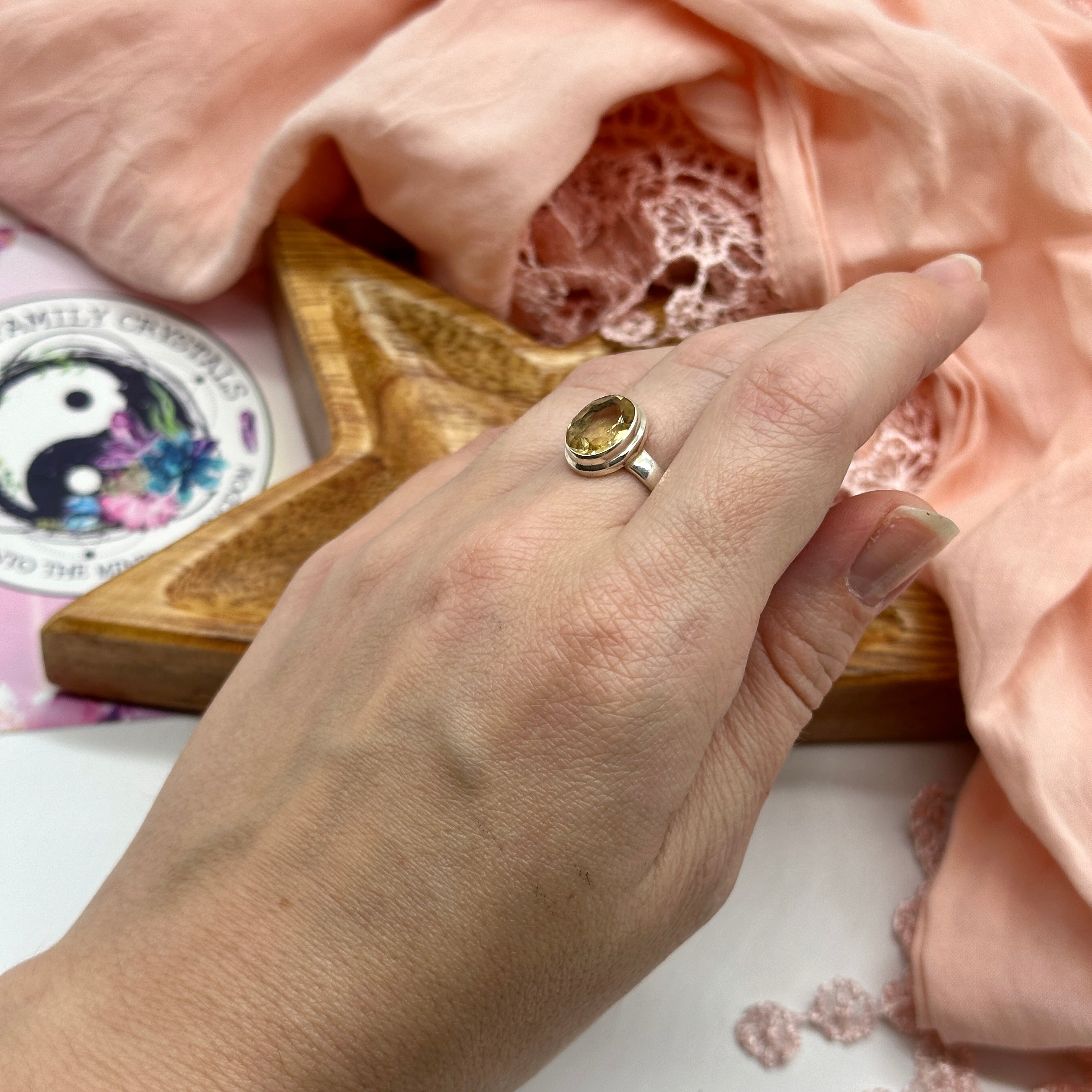
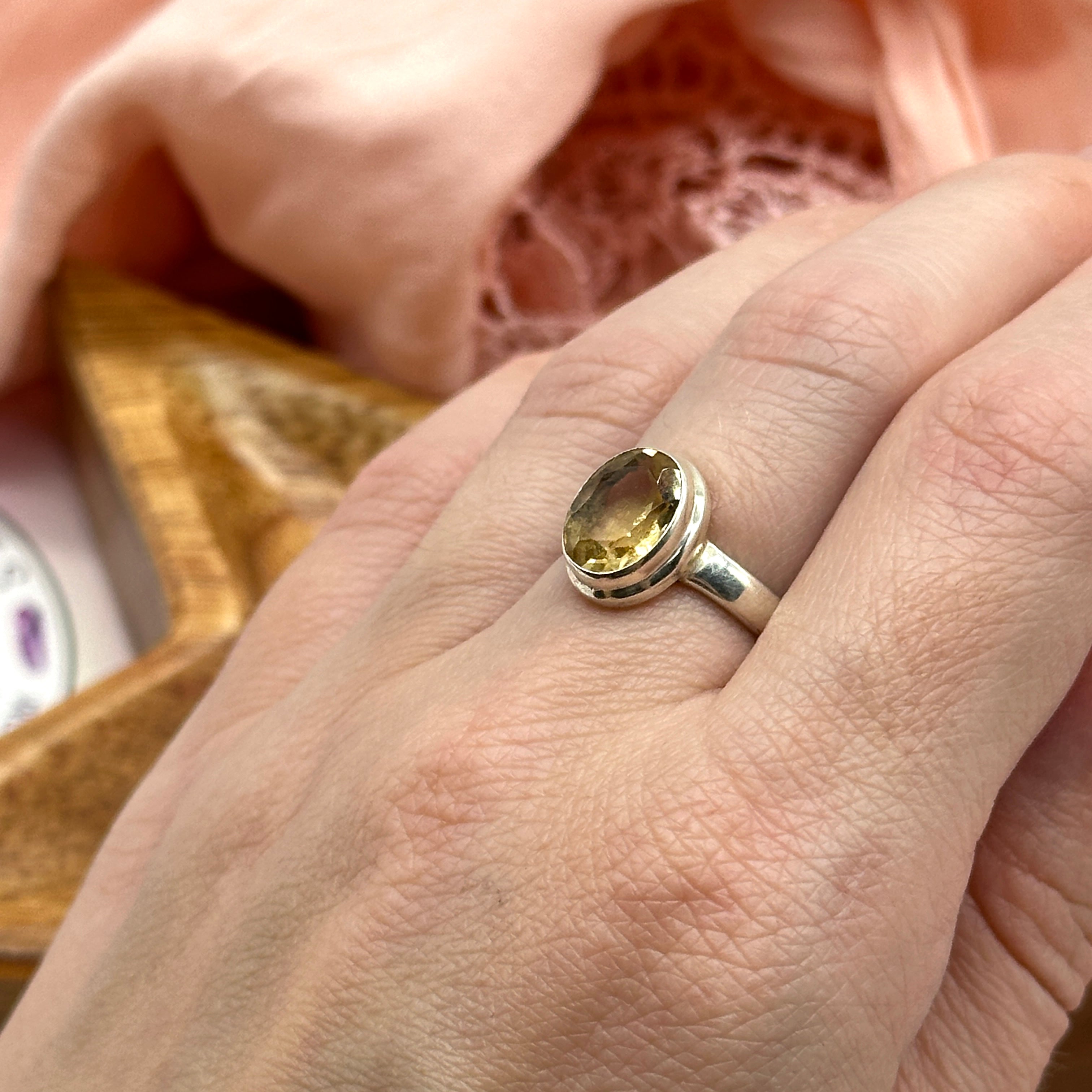
What is citrine?
Citrine is the yellow-to-orange variety of quartz. Its color comes from tiny traces of iron and runs from pale lemon to golden honey and deep orange-brown. It's a hard stone (7 on the Mohs scale), so it holds up well in jewelry, and it's the birthstone for November.
In crystal traditions, citrine is known as a stone of abundance and confidence. That's why so many people keep a piece close to where they work or plan.
Natural citrine vs heat-treated citrine
Most citrine sold today started out as amethyst. Heat purple amethyst (or sometimes smoky quartz), and it turns yellow or orange. The Gemological Institute of America describes natural citrine as rare and notes that most citrine on the market is heat-treated amethyst.
Natural citrine
Heat-treated citrine
Color
Pale yellow, champagne or soft honey
Bright orange to reddish-brown
Color pattern
Fairly even throughout the crystal
Strongest at the tips, often with a white or milky base
Usual forms
Single points, small clusters, tumbled stones
Clusters, geodes, and large "cathedrals"
Price
Higher, because it's rare
Lower and widely available
Is heat-treated citrine fake?
No. It's still real quartz, and plenty of collectors love its deeper orange. What matters is that you know which one you're paying for. A seller who calls a bright orange cluster with a white base "natural citrine" isn't being straight with you.
How can I tell if my citrine is real?
- Check the base. Orange tips fading into a white or milky base almost always mean heated amethyst.
- Look at the color. Natural citrine is usually soft and even. Burnt-orange or reddish tones point to heat treatment.
- Compare size and price. Large, bright citrine clusters at low prices are nearly always treated.
- Look for bubbles. Tiny round bubbles or perfectly uniform color can mean glass, not quartz.
Still unsure about one of ours? Ask us before you buy.
Why people choose citrine crystals
People choose citrine for different reasons. The most common uses:
- Goal setting and manifestation: a point on the desk while you plan the week
- Meditation and affirmations: a tumbled stone or ring held while you set an intention
- A warm accent at home or work: its golden color brightens a shelf or windowsill
- Gifts: especially for November birthdays
(These are traditional and personal uses. We don't make medical claims about any crystal.)
How to use citrine crystals
- On your desk: keep a point in view while you work.
- At home: place a cluster in the living room or entryway. In feng shui, citrine is often placed in the wealth corner, the far-left corner from the front door.
- In meditation: hold a small stone in your palm while you repeat an affirmation.
- Every day: wear a citrine ring or pendant, or carry a tumbled stone in your pocket.
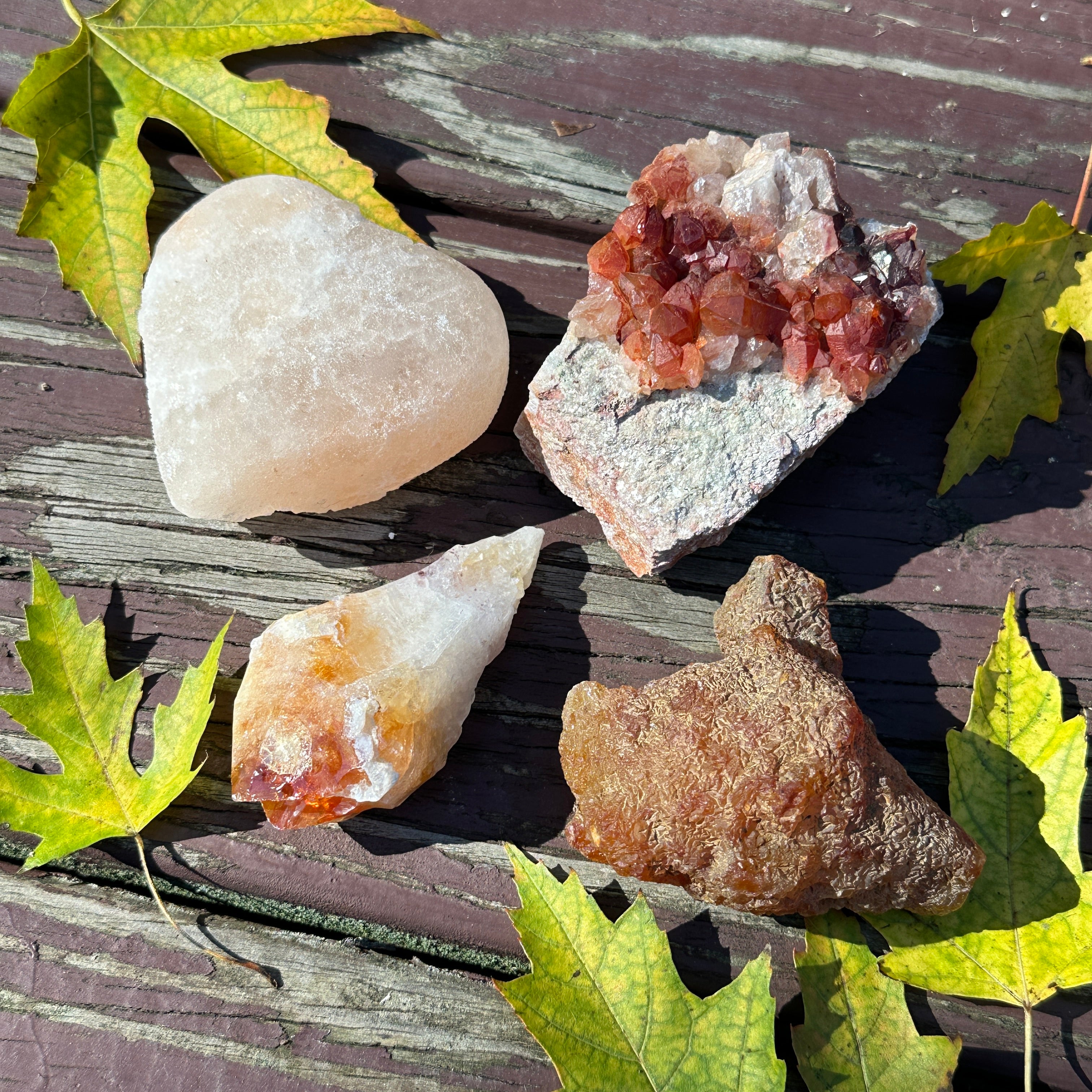
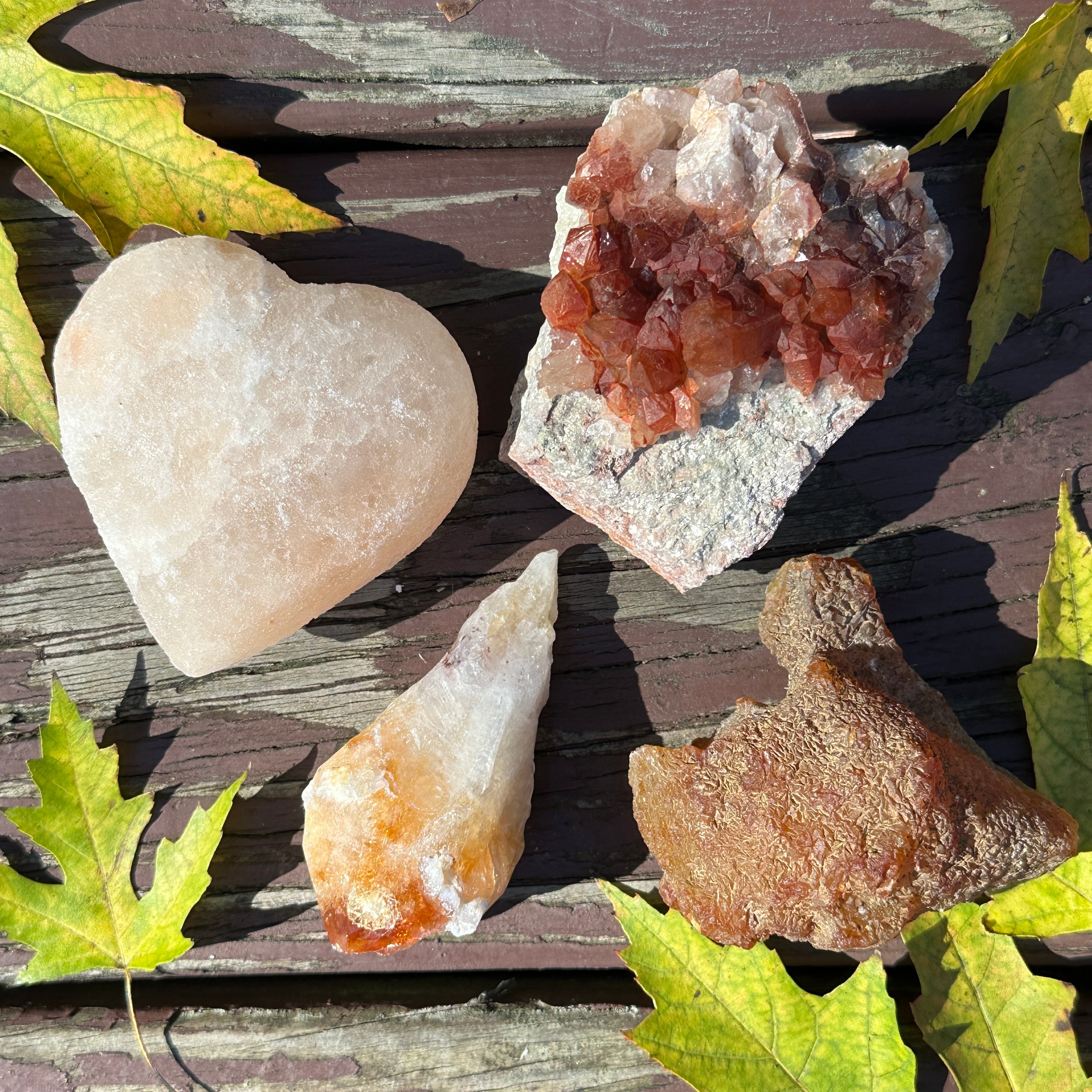
It also works well alongside other stones. Our Kundali Set of 4 Lower Chakra Crystals pairs a citrine point with red fire quartz, carnelian, and a Himalayan salt heart. For more ideas, browse our healing crystals.
Caring for your citrine
Wipe it with a soft, damp cloth. A drop of mild soap is fine; harsh cleaners aren't. Many collectors keep it out of strong, direct sunlight for long stretches, because some stones can lighten over time.
Store your citrine jewelry separately. Harder gems, such as topaz and sapphire, can scratch it.
Citrine crystal FAQs
What is citrine crystal used for?
In crystal traditions, citrine is linked with abundance, confidence, and motivation. People use it for goal setting, meditation, and affirmations, and as a warm decorative stone for the home or office.
Is your citrine natural or heat-treated?
Every product listing says which it is. Natural citrine is usually pale and even in color. Heat-treated citrine, made from amethyst, is a deeper orange with a lighter base.
Where should I put citrine in my home?
Popular spots are a desk, home office, living room, or entryway. In feng shui, citrine is often placed in the wealth corner, the far-left corner of a room or home when facing it from the front door.
Is citrine good for beginners?
Yes. It's durable, easy to care for, and one of the most popular first crystals. A tumbled stone or small point is an affordable place to start.
Can citrine go in water?
It's quartz, so a quick rinse won't harm it. Don't soak wire-wrapped jewelry, though: water can tarnish copper and loosen the wrap. Dry everything with a soft cloth.
Shop citrine at Earth Family Crystals
We choose each piece by hand and describe it honestly, including where it's been treated. New to crystals? Our guide to crystal healing covers the basics.